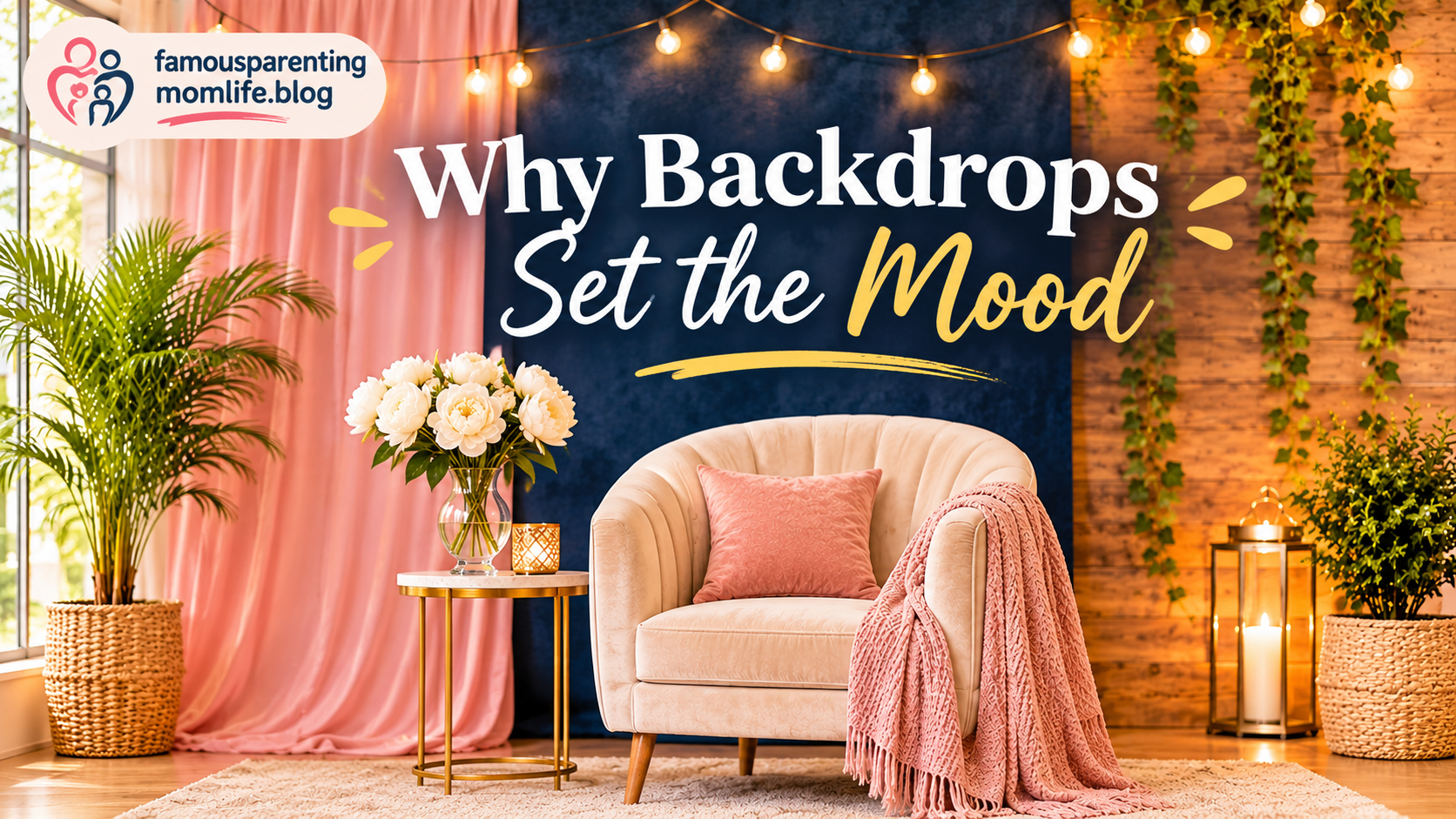
Why Backdrops Set the Mood comes down to what your eyes absorb before your brain even registers a face. A background scene works like a silent narrator. It tells guests whether to relax, celebrate, or sit up straight. Think about walking into a café with warm wood walls and soft lighting. You slow down without trying. Now picture a stark white room with harsh bulbs. Your shoulders tighten. Photographers, event planners, and designers rely on this reaction every day. Color psychology, texture, and ambient lighting all team up to shape a first impression in seconds. Once you understand that link, you can build a visual atmosphere that feels exactly right for your occasion.
The Science Behind Why Backdrops Set the Mood
Your brain reads the visual environment before it studies any face or object. Warm hues feel inviting while cool ones feel calm. Context shapes memory too. A cozy setting makes a moment feel tender while a stark one feels serious.
How Color Changes Emotion
Blue and green lower stress levels and invite a relaxed mood. Red and orange raise energy fast. Black adds drama and polish. Soft pastels whisper romance. Pick one dominant shade and let a second accent color play support.
Texture, Pattern, and Depth
A soft fabric drape feels gentle and safe. Raw brick or weathered wood feels edgy and earthy. Bold patterns add playfulness but can overwhelm a small frame. Keep busy prints behind simple outfits and minimal décor.
Lighting: The Secret Partner
Light changes everything. Warm string lights make a backdrop glow while harsh overhead bulbs flatten it. Test your setup under real conditions. Check color temperature too since cool bulbs can turn cream into gray.
Why Backdrops Set the Mood at Weddings and Parties
A floral arch or balloon garland sets the tone before the first toast. Guests feel the celebration vibe instantly. Matching the color palette to your theme keeps photos cohesive. A dessert table looks dreamy against soft ambient lighting.
Photography and Portrait Sessions
Seamless paper keeps attention on your subject. Painted canvas adds an artistic and moody studio look. Place your subject several feet from the backdrop. This builds depth and avoids harsh shadows.
Video Calls and Home Offices
A tidy bookshelf signals reliability on camera. A blurred virtual background feels neutral and polite. At home, an accent wall can shift your energy. Deep green calms a bedroom. Bright coral wakes up a workspace.
Quick Backdrop Mood Chart
Use this chart as a fast starting point.
| Backdrop Style | Mood It Creates | Best Use |
|---|---|---|
| Soft pastel drape | Romantic and gentle | Weddings, newborn shoots |
| Deep navy or black | Dramatic and premium | Product launches, portraits |
| Natural wood or greenery | Warm and grounded | Cafés, family photos |
| Bright solid color | Playful and energetic | Birthdays, kids’ parties |
| White seamless paper | Clean and focused | Headshots, online stores |
Pick the row that matches your occasion and adjust from there.
Common Backdrop Mistakes to Avoid
Clutter ruins visual balance. Wrinkled fabric and uneven lighting also cheapen a scene fast. Mismatched colors confuse your message. Steaming your drape takes two minutes and saves hours of photo editing.
How to Choose the Right Backdrop
Now that you see why backdrops set the mood, start with the feeling you want. Then work backward to the color scheme and material. Measure your space and test samples at different hours. Small swatches prevent big budget mistakes.
Final Thoughts on Why Backdrops Set the Mood
Color, texture, and light work as a team to guide first impressions. Each choice nudges how people feel. Choose with intentional design and test before the big day. Your audience may never name the reason but they’ll feel why backdrops set the mood.
Visit Famousparentingmomlife for more details.