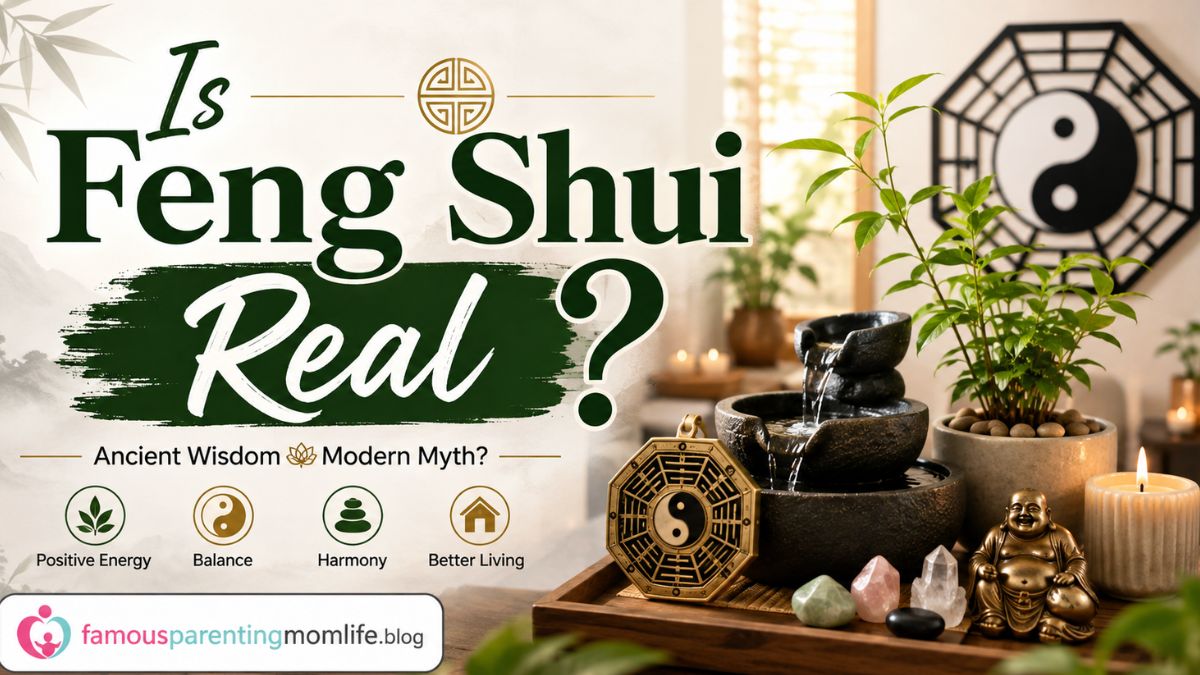
You’ve probably heard that a cluttered desk kills your luck or a mirror facing your bed ruins your sleep. These ideas come from feng, the ancient Chinese practice built around energy flow and spatial harmony. But is feng shui real, or is it just a comforting story about our homes? The truth sits somewhere in the middle.
There’s no proven scientific evidence behind mystical energy called qi, yet many feng principles overlap with real environmental psychology. Natural light, clean spaces, and good airflow genuinely boost your mood and focus. So this ancient practice may actually work, just not for the reasons old texts originally claimed.
What Feng Shui Actually Means
Feng translates to “wind and water,” and it’s rooted in the idea that your surroundings affect your life energy, often called qi. Practitioners arrange furniture, doors, and colors to guide this energy through a space in a way that supposedly brings luck, health, and wealth.
The practice dates back thousands of years and grew out of Chinese philosophical traditions, including Taoism. It wasn’t originally about home decor at all. Early feng shui masters used it to pick burial sites and building locations based on natural landscapes like mountains and rivers.
The Science Side of the Debate
Here’s where things get interesting. There’s no scientific evidence proving that invisible energy flows through your living room and changes your mood or income. No known instrument can measure qi, and skeptics repeatedly point to this as the main issue.
That said, some feng shui principles overlap with real, testable ideas from environmental psychology. Natural light, clutter-free spaces, and good airflow genuinely improve mood and focus. So when feng shui tells you to declutter or let in more sunlight, the benefit isn’t mystical. It’s just solid design backed by behavioral science.
Why So Many People Still Believe In It
Belief in feng shui often comes down to psychology rather than physics. When someone rearranges their home and then feels calmer or more productive, they credit the practice itself. This is closely tied to the placebo effect, where expecting a positive outcome can genuinely shape how you feel.
There’s also comfort in ritual. Following feng shui guidelines gives people a sense of control and intention over chaotic parts of life, like a stalled career or relationship stress. That feeling of doing something proactive can reduce anxiety, even if the “energy” explanation isn’t literally true.
Feng Shui Principles vs. What Research Supports
| Feng Shui Claim | What It Suggests | What Research Actually Shows |
| Clear clutter for better energy flow | Improves luck and focus | Clutter is linked to higher stress and lower concentration |
| Face your desk toward the door | Brings career opportunities | A commanding view supports alertness and reduces startle response |
| Add plants for positive energy | Attracts prosperity | Indoor plants improve air quality and lower reported anxiety |
| Avoid mirrors facing the bed | Prevents restless sleep | No sleep studies confirm mirror placement affects rest |
| Use specific colors for wealth or love | Activates life areas | Color psychology shows moods shift with color, not fortune |
Is Feng Shui Real in Practice
So, is feng shui real as a mystical force? Most experts would say no, at least not in the way ancient texts describe it. But is feng shui real as a design philosophy that nudges people toward cleaner, calmer, more intentional spaces? That part holds up surprisingly well.
Many interior designers borrow feng shui concepts today, not because they believe in energy currents, but because the underlying advice, like balance, symmetry, and natural materials, tends to create spaces people genuinely enjoy. It’s less about mystical forces and more about thoughtful home organization that happens to have ancient roots.
How to Use Feng Shui Without the Superstition
You don’t need to believe in qi to benefit from feng shui-inspired changes. Start small: clear pathways, let in natural light, and keep your workspace facing an open area instead of a wall. These changes align with both feng shui tradition and modern interior design logic.
Think of it as borrowing the practical parts of a cultural tradition while leaving the supernatural claims aside. You get a calmer, more functional home either way, and that’s a win whether or not you buy into the spiritual backstory.
Final Thoughts
Feng shui sits in an interesting space between ancient wisdom and modern skepticism. The energy-based claims don’t hold up under scientific scrutiny, but the practical advice, like decluttering, using natural light, and creating open pathways, genuinely supports better mental wellbeing. Whether or not feng is “real” in a mystical sense, it’s clearly onto something when it comes to designing spaces that make people feel good. That’s a pretty solid reason to give it a try, no belief required.
Visit famousparentingmomlife for more details.