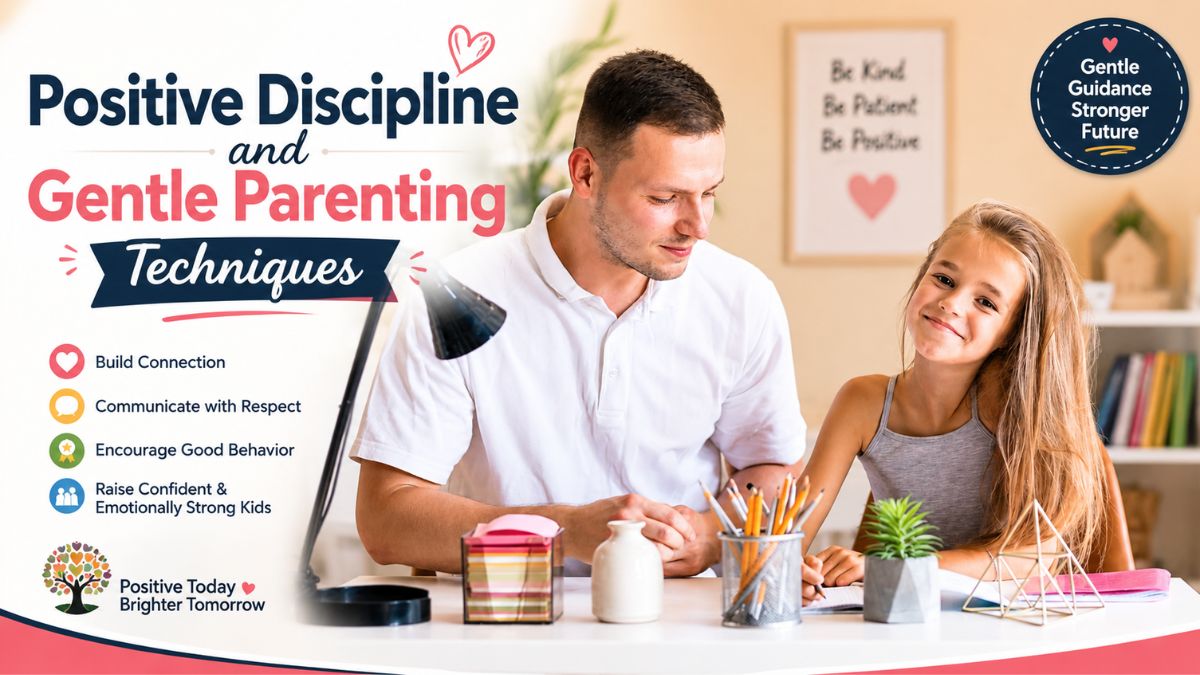
Gentle Parenting Techniques offer a better way through that moment every parent hits, when yelling feels like the only option left. This isn’t about punishment or letting kids run wild — it’s a middle ground built on respect, patience, and real communication. Instead of forcing quick obedience, this approach teaches children why their choices matter, using calm boundaries instead of fear.
That’s the heart of Gentle Parenting Techniques: staying steady when your child can’t, and guiding rather than controlling. Parents who try it often notice fewer power struggles and stronger emotional connection at home. This guide walks through practical techniques you can start using today, without needing a psychology degree or endless patience reserves.
What Is Positive Discipline, Really?
Positive discipline is a parenting approach built on mutual respect and clear communication. It doesn’t mean permissive parenting or letting kids do whatever they want. Instead, it teaches children why certain behaviors matter, and it holds firm boundaries without shame or fear.
The goal isn’t quick obedience. It’s raising a child who understands consequences, who can regulate their own emotions, and who feels safe coming to you when something goes wrong. That’s the real difference between discipline and punishment.
Core Principles Behind Gentle Parenting Techniques
Gentle parenting rests on a few key ideas that guide every decision you make with your child. It treats kids as people with real feelings, not as problems to control. Every technique under this approach connects back to empathy, consistency, and respectful communication.
Parents who practice this style aren’t soft on rules. They’re firm on boundaries but kind in delivery, which is a subtle but powerful shift. Kids raised this way tend to develop stronger self-regulation skills over time.
Respect Over Control
Respect means talking to your child the way you’d want to be spoken to, even during a meltdown. You explain the “why” behind a rule instead of demanding blind compliance, and that builds trust rather than resentment.
Connection Before Correction
Once a child feels truly heard, listening comes so much easier for them. A quick moment of validation — “I see you’re upset” — often calms a child down faster than any lecture ever could.
Positive Discipline Techniques You Can Start Today
You don’t need a psychology degree to apply gentle parenting at home. Small, consistent changes in how you respond to misbehavior make a noticeable difference within weeks. Pick just one or two techniques to begin with — trying to change everything overnight usually backfires.
The table below covers practical discipline strategies you can use depending on your child’s age and the situation.
| Technique | What It Looks Like | Best For |
| Natural consequences | You step back and let your child feel what actually happens after their choice | 4 years and up |
| Redirection | You gently steer their focus toward something better instead of just saying “no” | Toddlers |
| Calm-down corner | A soft, cozy spot to reset — never used as a punishment | 3 years and up |
| Collaborative problem-solving | You sit together and ask, “what could we try differently next time?” | School-age kids |
| Clear, calm limits | You say the rule once, in a steady voice, with zero anger behind it | Every age |
Each of these methods teaches a skill instead of just stopping a behavior in the moment. Over time, that skill becomes part of how your child handles frustration on their own.
Common Gentle Parenting Mistakes to Avoid
Even well-meaning parents slip into old habits under stress, and that’s completely normal. One common mistake is confusing gentle parenting with no boundaries at all, which usually leads to more chaos, not less. Kids still need structure, and consistency is what makes any discipline style actually work.
Another mistake is over-explaining during a meltdown, when a child’s brain simply can’t process logic yet. Wait until everyone’s calm before discussing what happened, then use that moment to reinforce the lesson.
Positive Discipline vs Traditional Discipline
Understanding the contrast helps explain why so many parents are switching approaches.
| Factor | Traditional Discipline | Positive Discipline |
| Go-to method | Punishments and time-outs | Teaching moments and real-world consequences |
| What it targets | Shutting down the bad behavior fast | Growing skills that last well beyond childhood |
| The vibe | Rooted in fear of getting in trouble | Rooted in mutual respect |
| Parent’s job | Playing the rule-enforcer | Acting as a coach who guides |
| Where it leads | A child who just obeys | A child who disciplines themselves |
Neither approach happens overnight, but the long-term outcomes of positive discipline tend to favor kids who can think through decisions on their own.
How to Handle Tantrums the Gentle Way
Tantrums aren’t manipulation. They’re a sign that your child’s emotional brain is overwhelmed and hasn’t yet developed the tools to cope. Staying calm yourself is the single most effective tool you have in that moment, even when it’s genuinely hard.
Get down to your child’s eye level, acknowledge the feeling, and wait it out without giving in to demands or losing your temper. This isn’t weakness — it’s modeling the exact self-control you want your child to learn.
Building Long-Term Emotional Skills in Kids
The real payoff of gentle parenting shows up years later, not in the moment. Kids who grow up with positive discipline tend to develop stronger conflict-resolution skills and better emotional vocabulary, which helps them in friendships and school.
This doesn’t mean your child will never misbehave again. It means they’ll have the internal tools to recover, reflect, and make better choices the next time, which is the entire point of discipline in the first place.
Final Thought
Positive discipline isn’t about being a pushover parent, and it isn’t a quick fix either. It’s a long-term investment in raising a child who understands their emotions and respects boundaries because they genuinely get why those boundaries exist. Start small, stay consistent, and give yourself grace on the hard days — gentle parenting is a practice, not a perfect science.
Visit Famousparentingmomlife for more details.