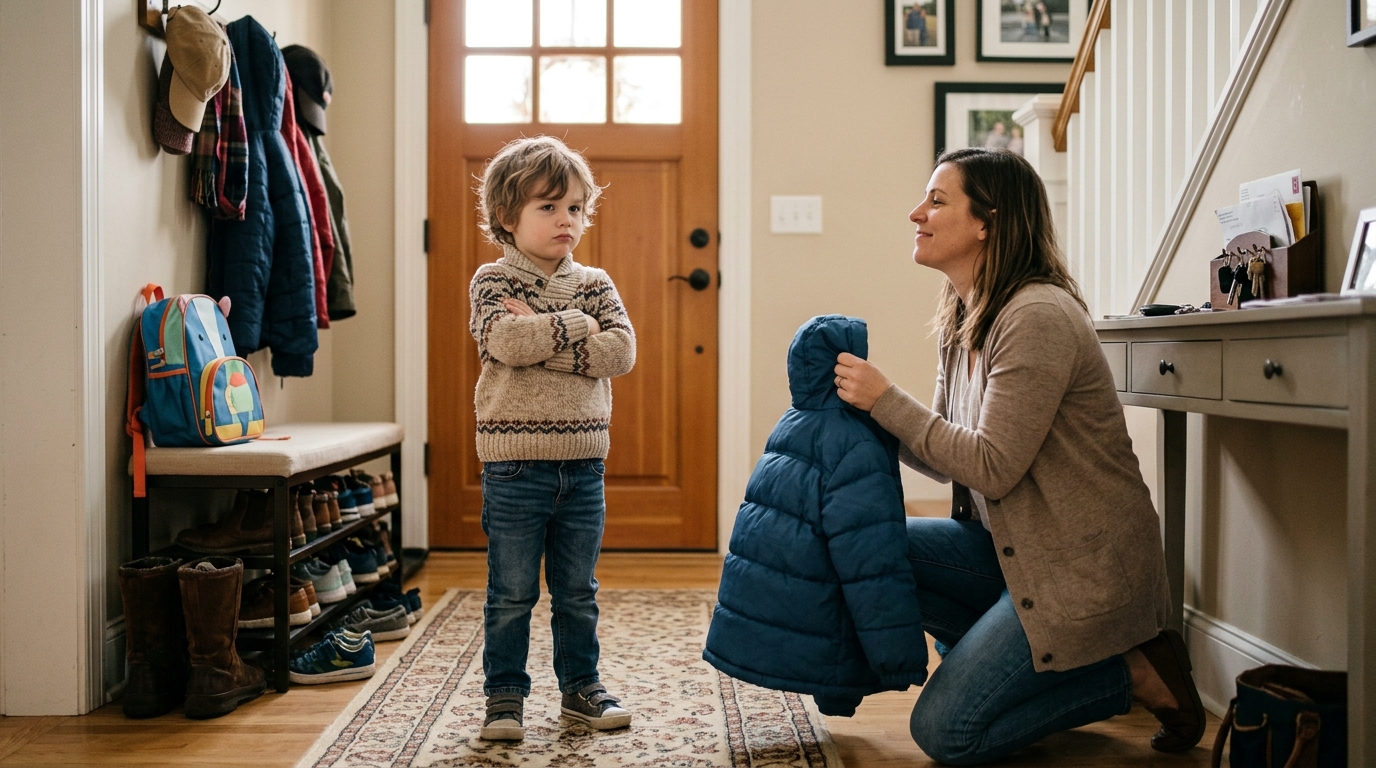
“FAFO parenting” sounds like something shouted across a parking lot, not discussed in a pediatrician’s office. But the phrase, shorthand for “f— around and find out,” has become one of the most talked-about parenting trends in recent years, sparking viral videos, podcast debates, and newspaper columns arguing over whether it is a cure for parental burnout or a polished label for neglect. Strip away the shock value and FAFO parenting is a fairly simple idea: stop rescuing your child from every small, safe mistake and let the real world deliver the lesson.
What Is FAFO Parenting?
FAFO parenting is a child-rearing approach in which parents allow children to experience the natural consequences of their own decisions, as long as the outcome is safe and age-appropriate. Parents.com describes it as a style that lets kids “find out” the results of their choices without heavy parental interference. If your child refuses a jacket, they get cold. If they skip dinner, they get hungry until breakfast. The parent asks, warns, and then steps aside.
The limits matter more than the label. Dr. Tamara Glen Soles, founder of The Secure Child Centre for Families and Children, told Parents.com that natural consequences fit whenever the outcome will not endanger a child or trample someone else’s rights. Skipping one snack leaves a child hungry, not harmed. Pushing a friend is different; that is unsafe behavior, and natural consequences are not the tool for it Parents.
Where the Term Comes From
The acronym is older than the trend. Reporting cited by Parents.com traces “FAFO” to African American Vernacular English, where it circulated for more than a decade before migrating into general internet slang. It entered the parenting conversation through social media and was later covered by major outlets, including The Wall Street Journal, which helped turn a throwaway phrase into a recognizable parenting style WSJ.
Why FAFO Parenting Is Everywhere Right Now
Most experts frame FAFO as a pendulum swing. For years, the dominant advice was “gentle parenting,” a child-centered method built on validating feelings and negotiating limits. The problem is that the version many parents actually practiced turned into an endless debate over every instruction, and the burnout was real.
Clinical psychologist Dr. Becky Kennedy, founder of Good Inside, told Parade that FAFO “has risen in popularity partly in reaction to gentle parenting and helicopter parenting,” and that it offers parents relief from constant over-involvement Nashville Parent. Dr. Emma Svanberg, a psychologist and author of Parenting for Humans, makes a similar point in The Guardian: gentle parenting methods, or at least what people believe they involve, can leave parents feeling exhausted. Professor Ellie Lee of the University of Kent adds that modern parenting has become unusually intensive, which makes any permission to relax feel appealing The Guardian.
FAFO Parenting vs. Gentle Parenting
The two styles are not opposites, even if social media treats them that way. Gentle parenting focuses on emotion coaching and connection before correction. FAFO parenting focuses on outcomes: the world responds to your choices whether or not anyone has explained them.A balanced parenting style combines the best of both approaches. Set clear expectations your child can understand, respond patiently when they push boundaries, and let them discover what happens when they make small, safe choices on their own without putting their well-being at risk. Early years specialist Gaby Gonzalez explains in The Guardian that although the term may sound severe, the real goal is to let children experience manageable consequences while ensuring they feel safe and supported safe, age-appropriate consequences instead of constant intervention.
Real-Life FAFO Parenting Examples by Age
Toddlers and preschoolers
A three-year-old refuses a coat on a cold morning. Instead of a fifteen-minute standoff, the parent says, “Okay,” and heads outside. Minutes later the child asks for the jacket. Kylie Kelce shared exactly this scenario on her podcast. Psychologist Dr. Maryhan Munt told The Guardian she supports natural consequences at this level, while warning that they should come from structure, not from a parent who simply cannot be bothered.
Early elementary
If children keep leaving their toys all over the place, parents can store them away temporarily until they learn to put things back and look after their belongings. A forgotten lunch means a hungry afternoon rather than a mid-day delivery. Dr. Soles recommends a more gentle approach: children should help clean up their own spills, while toys may be put away for a short time if they are used inappropriately.
Tweens and teens
This is where FAFO does its heaviest lifting. One writer at Today’s Parent described knowing her son had left a major school project at home and letting him walk out the door anyway. He lost points and had to explain himself to his teacher. He never forgot the assignment again. Parenting educator Kimberly King recommends setting clear expectations around homework. Rather than warning children that they might fail, parents can explain that their assignments need to be completed before they get screen time.
The extreme end
The Guardian documented viral clips of a mother throwing her daughter’s iPad out of a window and another locking a child outside after a threat to run away. These are the examples critics point to, and most experts treat them as a warning rather than a template.
The Benefits Experts Do Agree On
Today’s Parent lists the upside clearly: children build resilience and independence, take ownership of their actions, develop critical thinking, and learn how the real world responds to choices. Psychotherapist Georgia Dow explained that children can benefit from learning through their own experiences and seeing how their choices play out in real life. the prefrontal cortex, the part of the brain that handles consequences, mature. There is also a practical benefit for parents: fewer lectures, fewer power struggles, and less of the emotional labor that fuels burnout.
The Risks and the Criticism
The criticism is not that consequences are bad. It is that FAFO is easy to misapply.
- Punishment wearing a costume. The Your Parenting Mojo podcast argues that FAFO often confuses punishment with consequence, positioning the parent as an adversary who quietly enjoys being right Your Parenting Mojo.
- Shame kills the lesson. Dr. Soles warns against the follow-up comment, “I told you you needed a jacket.” Say it, she says, and the relationship takes a hit while the lesson stops sinking in.
- Emotional isolation. Dr. Svanberg cautions in The Guardian that if FAFO becomes emotionally hands-off, children may internalize shame or feel unsupported with experiences beyond their developmental reach.
- Developmental readiness. Very young children do not yet have the foresight or impulse control to learn from an abstract outcome, so the method needs a minimum age.
- Honesty can suffer. When children fear the fallout, they hide mistakes instead of reporting them, which is the opposite of what most parents want.
Natural vs. Logical Consequences: Know the Difference
Parenting Now draws a useful line. Natural consequences happen without adult interference: a child overloads a backpack and it becomes too heavy; a child stays up late and is exhausted at school. Logical consequences are created by the parent but stay connected to the behavior: no shoes means no going outside; crayons get broken on purpose, so crayons are off limits for a while. FAFO is mostly about the first kind. When you need the second kind, keep it related, keep it calm, and keep it short Parenting Now.
How to Use FAFO Parenting Without Crossing the Line
- Run a safety check first. If the outcome could hurt your child or someone else, or affect their health, this is not a natural-consequence moment. You step in.
- Match it to your child’s stage. A five-year-old needs you to insist on the hat and gloves. A fifteen-year-old can own the decision and the shiver.
- Let the consequence speak. Resist the victory lap. Silence teaches better than “I told you so.”
- Pair accountability with connection. Kimberly King’s advice is to blend the two: consequences plus emotional support, not consequences instead of it.
- Talk before and after. Ask, “What do you think will happen if you do that?” and later, “That did not go how you hoped. What would you try next time?”
- Solve the pattern together. If your child forgets their lunch every single day, that is a systems problem, not a lesson problem. Build the checklist together. Dr. Kennedy suggests the same for homework: offer a reminder on the desk rather than a daily rescue.
Frequently Asked Questions About FAFO Parenting
What does FAFO mean in parenting?
It stands for “f— around and find out.” In parenting, it means letting a child make a choice and experience the natural, safe consequence of it instead of being talked out of it or rescued from it.
Is FAFO parenting the same as neglect?
No. Neglect is the absence of care. FAFO, done properly, is the presence of boundaries plus a deliberate decision not to shield a child from a safe outcome.
What age is FAFO parenting appropriate for?
It works best once a child can connect a choice to an outcome. That usually means the preschool years and up. Younger children still need direct guidance.
Is FAFO parenting the opposite of gentle parenting?
Not really. Gentle parenting emphasizes connection and emotion coaching; FAFO emphasizes outcomes. Used together, they cover both the relationship and the real world.
Can FAFO parenting damage trust?
It can, if it slides into shaming, silent withdrawal, or consequences that are cruel or wildly out of proportion. The damage comes from the tone and the extremes, not from the concept itself.
Final Thoughts on FAFO Parenting
FAFO parenting is neither the collapse of modern parenting nor a miracle cure. It is one tool, best used on small, reversible, non-dangerous problems, and best paired with warmth. Let your child feel a forgotten coat or a missed deadline while the stakes are low. You’re basically rehearsing adulthood with a safety net still in place. The lesson lands harder when the world delivers it. It lands kinder when you’re standing beside your child through the natural consequences.
Visit Famousparentingmomlife for more details.